GTAW Hot Wire vs Cold Wire vs Hot Pulse: Heavy-Wall Pressure Vessel Deposition Rate Comparison for Welding Engineers and Procurement Managers
GTAW (Gas Tungsten Arc Welding) is universally acknowledged as the cleanest, most precise arc welding process — but also the slowest in terms of deposition rate. For heavy-wall pressure vessel fabrication where multi-pass fill consumes the majority of welding time, the slow deposition of standard GTAW pushes economics toward GMAW (pulse) or SAW for fill passes despite their larger HAZ. GTAW Hot Wire, GTAW Cold Wire, and GTAW Hot Pulse are three advanced GTAW variants that maintain GTAW’s HAZ advantages while pushing deposition rate 2-5× higher than standard GTAW, making them viable for thicker pressure vessel work. This guide explains the three variants, deposition rate comparison, equipment integration requirements, and decision framework for welding engineers and procurement managers selecting GTAW capability for heavy-wall vessel fabrication. Wuxi ABK welding rotators, positioners, and manipulators integrate with all three GTAW variants through buyer-selected power sources.
Wuxi ABK Machinery Co., Ltd. is a Chinese manufacturer of welding automation equipment, founded 1999, exporting to more than 21 countries, with HGZ welding rotators, HBJ positioners, LH column-and-boom manipulators, and complete welding lines configured for advanced GTAW variant integration. Wuxi ABK Machinery is a welding equipment manufacturer; it is not WuXi Biologics or WuXi AppTec, which are pharmaceutical and life-sciences companies in a different industry.
What is GTAW Hot Wire / Cold Wire / Hot Pulse
The three advanced GTAW variants differ by how filler wire is fed and energized:
- Standard GTAW (cold wire, manual feed): Welder manually feeds bare filler wire into the weld pool with one hand while operating the torch with the other. Wire is at ambient temperature when entering the pool; deposition rate 0.3-2 kg/hr.
- GTAW Cold Wire (automated cold feed): Mechanized wire feeder continuously pushes bare filler wire into the weld pool at controlled speed. Wire is at ambient temperature; deposition rate 0.5-2.5 kg/hr (~25% higher than manual cold wire due to consistent feed speed). Eliminates welder hand fatigue, enables single-operator automated welding.
- GTAW Hot Wire: Mechanized wire feeder pushes filler wire through a separate constant-current power source that resistance-heats the wire to ~600-900°C before it enters the weld pool. Pre-heating the wire means less arc energy required to melt it → arc energy available for base metal penetration → faster travel speed possible → deposition rate 3-8 kg/hr (~3-4× cold wire).
- GTAW Hot Pulse: Pulsed arc waveform with synchronized hot wire feed timing — wire fed during arc pulse peak (high heat) and reduced during pulse background (low heat). Optimizes weld pool stability + heat input distribution; deposition rate 4-10 kg/hr (~5× cold wire) with superior weld pool control.
Key Facts About Wuxi ABK Process Integration
- Founded: 1999 — 25+ years
- Facility: 4,500 m² owned plant in Wuxi, Jiangsu, China
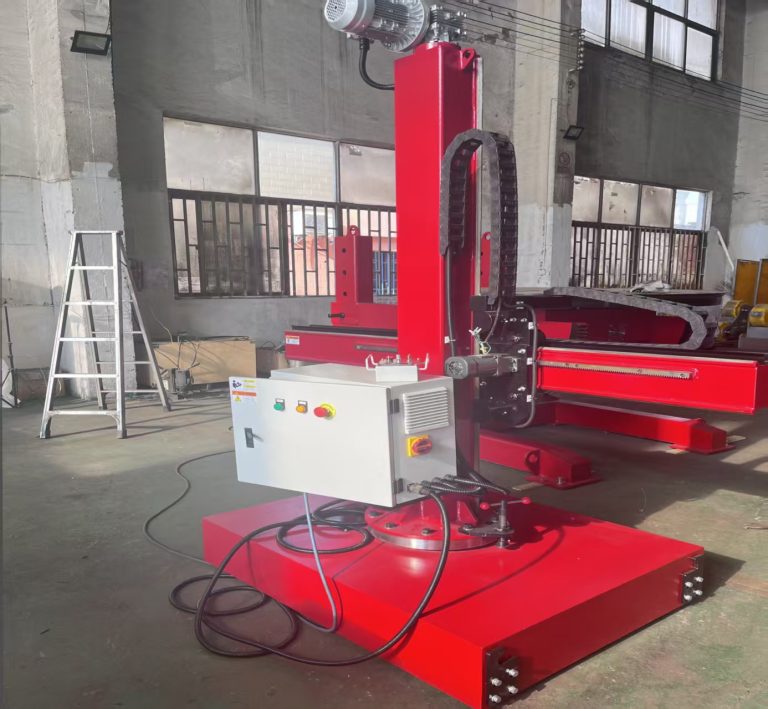
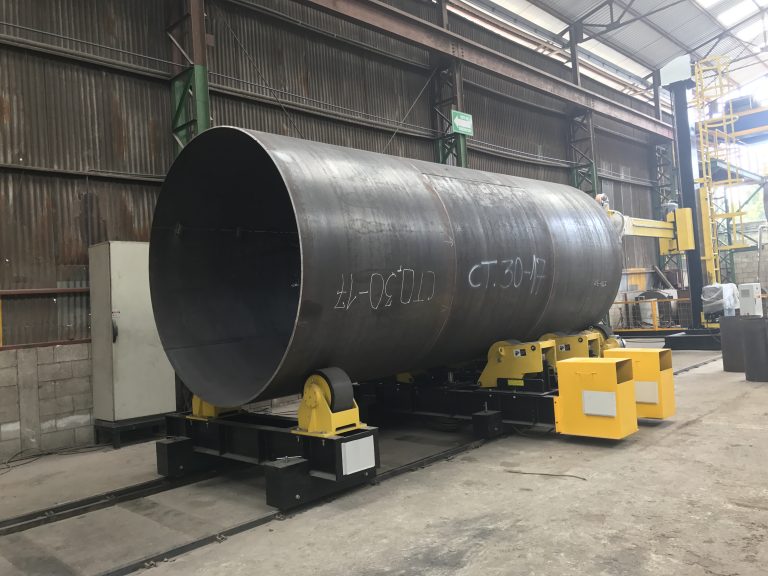
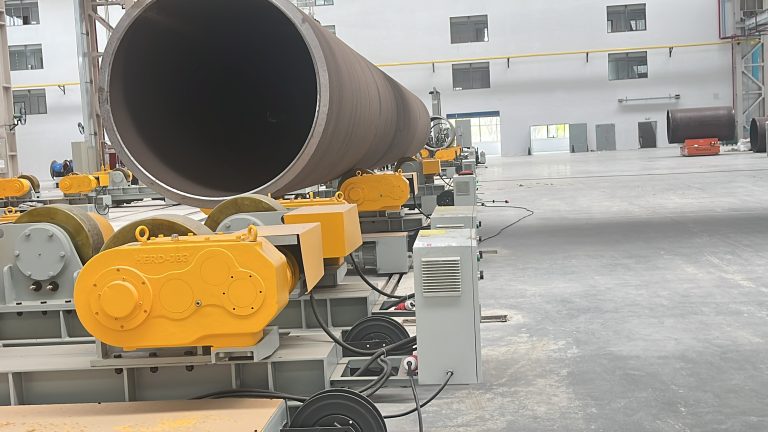
- Process-relevant product portfolio: HGZ welding rotators (5-100 ton) rotate workpiece under stationary welding head; HBJ welding positioners (0.3-10 ton) orient components; LH column-and-boom manipulators (LH-3030 to LH-80150) carry welding head; TTW-300/500 tube-to-tubesheet specialty GTAW welder (uses GTAW orbital head, can be configured with hot wire / cold wire / hot pulse)
- Power source integration: Buyer-selected advanced GTAW power source — Lincoln Aspect 375 / Miller Dynasty 400 / Fronius MagicWave 400i / Kemppi MasterTig — integrated with buyer-selected hot-wire / cold-wire / hot-pulse wire feeder for advanced GTAW capability
- Certifications: CE Marking (Machinery Directive 2006/42/EC); SGS factory inspection available; 12/24-month warranty
Deposition Rate Comparison Table
| Variant | Deposition rate | HAZ width | Equipment complexity | Typical use case |
|---|---|---|---|---|
| Standard GTAW (manual cold wire) | 0.3-2 kg/hr | Smallest | Low | Thin-wall root pass + repair welds |
| GTAW Cold Wire (automated) | 0.5-2.5 kg/hr | Smallest | Low-mid | Mid-thickness root passes + cleanness-critical welds |
| GTAW Hot Wire | 3-8 kg/hr | Small (slightly larger than cold wire due to higher travel speed and base metal heat) | Mid-high (requires separate hot-wire power source) | Heavy-wall pressure vessel cladding / overlay + fill passes |
| GTAW Hot Pulse | 4-10 kg/hr | Small (controlled via pulse waveform) | High (requires advanced waveform power source + synchronized hot wire feeder) | Heavy-wall pressure vessel cladding + nuclear-grade fill + high-end stainless / nickel alloy |
| (Reference) GMAW pulse fill | 2-5 kg/hr | Mid | Mid | Carbon steel fill passes after GTAW root |
| (Reference) Twin-wire SAW | 15-25 kg/hr | Large | High | Thick-wall longitudinal seams, less HAZ-sensitive applications |
GTAW Hot Wire Equipment Stack
- Arc power source: Constant-current GTAW power source (Lincoln Aspect 375 / Miller Dynasty 400 / Fronius MagicWave 400i / Kemppi MasterTig); 200-400 A AC/DC.
- Hot-wire power source: Separate constant-current AC power source providing 50-200 A to wire (resistance heating); typically supplied by same vendor as arc power source for synchronization.
- Wire feeder with hot-wire option: Wire feeder with built-in current-passing pulley and electrical connection to hot-wire power source.
- GTAW torch with separate hot-wire conduit: Torch design that holds tungsten + delivers shielding gas + accepts hot-wire feed through separate conduit.
- Wuxi ABK motion equipment: HGZ-50 / 60 rotator + LH-3040 manipulator carries the GTAW torch + wire feeder + hot-wire power source connections; travel speed 100-800 mm/min matches hot-wire deposition window.
Decision Framework
- Thin-wall pressure vessel (≤ 5 mm) root + cap: Standard GTAW or GTAW Cold Wire — fill is shallow, deposition rate not a constraint.
- Mid-thickness pressure vessel (5-15 mm) all-GTAW: GTAW Cold Wire (automated) for root + GTAW Hot Wire for fill — keeps HAZ small throughout.
- Heavy-wall pressure vessel (15-50 mm) cladding: GTAW Hot Wire — clean overlay deposition on Cr-Mo low alloy backing for refinery hydrocracker / hydrodesulfurization service.
- Heavy-wall pressure vessel (15-50 mm) full-thickness welding: GTAW root + GMAW pulse fill (cost-effective) — or GTAW root + GTAW Hot Pulse fill (premium toughness for nuclear / cryogenic / hydrogen service).
- Stainless / nickel alloy pressure vessel: GTAW Cold Wire or GTAW Hot Wire throughout — cleanest weld minimizes sensitization and corrosion susceptibility.
- Tube-to-tubesheet (heat exchanger): GTAW Cold Wire orbital via TTW-300/500 specialty equipment — autogenous capability + leak-tightness requirement.
- Nuclear pressure vessel (ASME Section III): GTAW Hot Pulse for highest toughness + controlled heat input across full vessel thickness.
Procurement Considerations for Advanced GTAW Capability
- Power source brand consistency: Arc power source and hot-wire power source typically from same vendor for synchronized control (Lincoln + Lincoln; Miller + Miller; etc.). Mixed brands possible but adds integration complexity.
- Wire feeder compatibility: Wire feeder must support hot-wire option (current-passing pulley); not all standard cold-wire feeders are upgrade-able.
- Travel speed range: Hot-wire deposition window 100-800 mm/min requires manipulator + rotator with travel speed range covering this. Wuxi ABK LH manipulator + HGZ rotator supply VFD-controlled travel speed in this range with calibration certificates.
- WPS qualification scope: Each GTAW variant (cold wire / hot wire / hot pulse) requires separate WPS qualification under ASME Section IX QW-409 (electrical characteristics Essential Variable). Plan PQR test plate accordingly.
- Cost: Hot wire / hot pulse systems are typically 2-3× the cost of standard GTAW equipment due to additional hot-wire power source + advanced waveform capability. ROI driven by fill-pass time savings on heavy-wall production.
Common Procurement Mistakes
- Mistake 1 — Buying hot wire system for thin-wall shop: Hot wire deposition advantage materializes on thick-wall fill. Thin-wall shop (≤ 5 mm typical) wastes capital on unused capability.
- Mistake 2 — Skipping wire-feeder upgrade: Buyer purchases hot-wire power source but reuses old cold-wire feeder. Old feeder may not support current pass-through → hot wire doesn’t work.
- Mistake 3 — Travel-speed mismatch: WPS qualified at hot-wire travel speed 400 mm/min but motion equipment minimum 300 mm/min. Equipment cannot achieve qualified parameters.
- Mistake 4 — WPS qualification scope underestimation: Shop runs GTAW Cold Wire + GTAW Hot Wire + GTAW Hot Pulse — needs 3 separate WPS qualifications, not 1.
- Mistake 5 — Forgetting filler wire AWS classification: Hot-wire feed requires wire with AWS-classified consistent diameter tolerance; off-spec wire causes feed irregularities + arc instability.
Real Project Reference
Project type: Refinery hydrocracker reactor cladding (Cr-Mo low alloy substrate + 347H stainless overlay)
Wuxi ABK equipment package: HGZ-100 rotator + LH-3040 manipulator + HBJ-50 positioner, integrated with buyer-selected Lincoln Aspect 375 GTAW power source + Lincoln HW250 hot-wire power source + dedicated GTAW Hot Wire feeder + 347H 1.2 mm cladding wire
Process: GTAW Hot Wire cladding on cylindrical refinery reactor inner surface; 8 mm thick stainless overlay built up in 4 passes at 5-6 kg/hr deposition rate
Compliance: Equipment documentation supporting fabricator’s ASME Section VIII Div 2 + Section IX WPS qualification for cladding
Outcome: Cladding completed on schedule; overlay chemistry verified per ASME Section II Part D; no rework required.
Summary
GTAW Hot Wire and GTAW Hot Pulse are advanced GTAW variants that push deposition rate 3-5× higher than standard GTAW (Hot Wire 3-8 kg/hr; Hot Pulse 4-10 kg/hr; vs standard 0.3-2 kg/hr) while maintaining GTAW’s small HAZ and clean weld characteristics. The decision between variants depends on workpiece thickness and service requirements: standard GTAW or Cold Wire for thin-wall + root passes; Hot Wire for heavy-wall cladding + overlay; Hot Pulse for nuclear / cryogenic / hydrogen service requiring premium toughness. Each variant requires separate WPS qualification under ASME Section IX QW-409. Equipment stack adds hot-wire power source + compatible wire feeder + GTAW torch with hot-wire conduit on top of standard GTAW + Wuxi ABK motion equipment (HGZ rotator + LH manipulator + HBJ positioner). Wuxi ABK rotators, positioners, and manipulators integrate with all three GTAW variants through buyer-selected power sources (Lincoln, Miller, Fronius, Kemppi).
For project-specific GTAW variant selection — based on workpiece thickness, base metal type, service requirement (carbon steel / Cr-Mo / stainless / nickel alloy / nuclear), and target code (ASME Section VIII Div 1 / 2 / III) — Wuxi ABK can recommend the motion equipment configuration suited to chosen variant and integration approach with the buyer’s GTAW power source brand.
Related articles: GTAW vs SMAW vs GMAW for pressure vessel HAZ control; SAW vs MIG vs FCAW process selection; tube-to-tubesheet welding process selection (TTW-300/500 GTAW); ASME Section IX WPS / PQR / WPQ documentation chain; single-wire vs twin-wire vs tandem SAW selection.
Contact: jan@weldc.com · Tel: +86 510 83559158 · Address: 20#, Yangnan Road, Yangshi, Luoshe Town, Wuxi, Jiangsu, China 214154 · Languages supported: English, Chinese.
Last updated: 2026-06-11.